
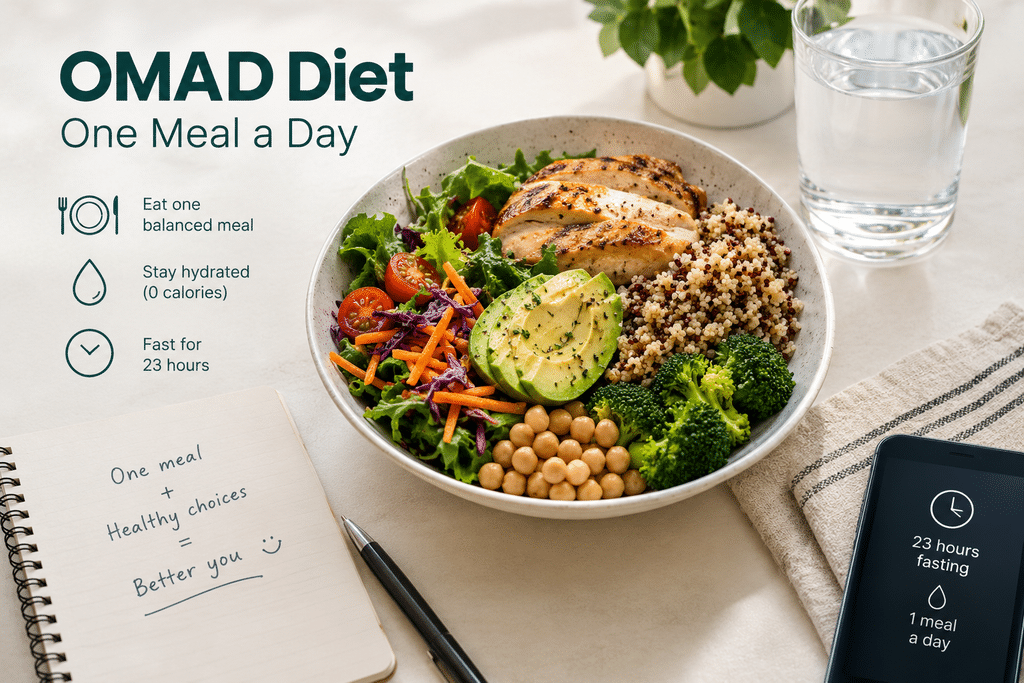
What Is the OMAD Diet?
The OMAD (One Meal a Day) diet is an eating pattern where you consume all your daily calories in one balanced meal, followed by fasting for the remaining 23 hours. Water and other calorie-free beverages are generally allowed during the fasting period.
Unlike standard intermittent fasting methods such as the 16:8 or 18:6 approach, which allow multiple meals within a restricted eating window, OMAD limits food intake to a single meal each day. This makes it one of the most restrictive forms of intermittent fasting and requires careful planning to meet daily nutritional requirements.
Common Claims About OMAD
The growing popularity of OMAD has led to several claims about its health benefits. Some of the most common include:
- Burns fat faster by encouraging the body to use stored fat for energy.
- Boosts metabolism through prolonged fasting periods.
- Helps with rapid weight loss by naturally reducing calorie intake.
- Improves focus and productivity by eliminating frequent meals.
- Suitable for everyone looking to lose weight.
While some of these claims may have scientific support in specific situations, the results vary from person to person. Long-term benefits and safety depend on overall diet quality, health status, and lifestyle.
Potential Benefits of the OMAD Diet
When followed appropriately under professional guidance, the OMAD diet may offer certain health benefits.
- Weight Management
Eating one meal a day can naturally reduce calorie intake, which may support weight loss when combined with a balanced diet.
- Improved Insulin Sensitivity
Some studies suggest that fasting periods may improve the body’s response to insulin, helping regulate blood sugar levels in healthy individuals.
- Simplicity and Convenience
With only one meal to prepare each day, OMAD can simplify meal planning and reduce the time spent cooking and eating.
- Possible Cellular Repair (Autophagy)
Extended fasting may promote autophagy, a natural process in which the body removes damaged cells and recycles cellular components. However, research in humans is still evolving.
- Reduced Calorie Intake
Since there is only one eating window, many people find it easier to control portion sizes and avoid unnecessary snacking.
Side Effects and Risks of OMAD
- Hunger and Fatigue
Long fasting periods can lead to intense hunger, irritability, dizziness, and reduced energy, especially during the initial weeks.
- Nutrient Deficiencies
Meeting daily requirements for protein, vitamins, minerals, and fiber in a single meal can be challenging.
- Low Energy Levels
Some individuals may experience reduced physical performance or difficulty concentrating due to prolonged fasting.
- Mood Changes
Extended periods without food may contribute to mood swings, anxiety, or irritability in some people.
- Hormonal Imbalance
Restrictive eating patterns may affect hormones related to metabolism, stress, and reproductive health, particularly in women.
- Digestive Issues
Eating a large meal at once may cause bloating, acidity, indigestion, or discomfort.
Who Should Avoid the OMAD Diet?
The OMAD diet is generally not recommended for:
- Pregnant and breastfeeding women
- Children and adolescents
- People with diabetes or those taking blood sugar-lowering medications
- Older adults with higher nutritional needs
- Individuals with a history of eating disorders
- People with chronic medical conditions unless advised by a healthcare professional
Foods to Include If You’re Following OMAD
If you choose to follow OMAD, your single meal should be nutrient-dense and well-balanced.
Include:
- Lean proteins such as lentils, beans, eggs, or tofu
- Healthy fats from nuts, seeds, avocados, and olive oil
- Fiber-rich whole grains, vegetables, and legumes
- A variety of fruits and colorful vegetables for essential vitamins and antioxidants
- Plenty of water and adequate hydration throughout the day
The OMAD diet may offer benefits such as weight management, improved insulin sensitivity, and a simpler eating routine, but it is not the right choice for everyone. Rather than following trends, choose an approach that supports your body’s unique needs. If you’re considering OMAD, consult a qualified healthcare professional to ensure it is safe and appropriate for you.